Talent Evolution Workshop
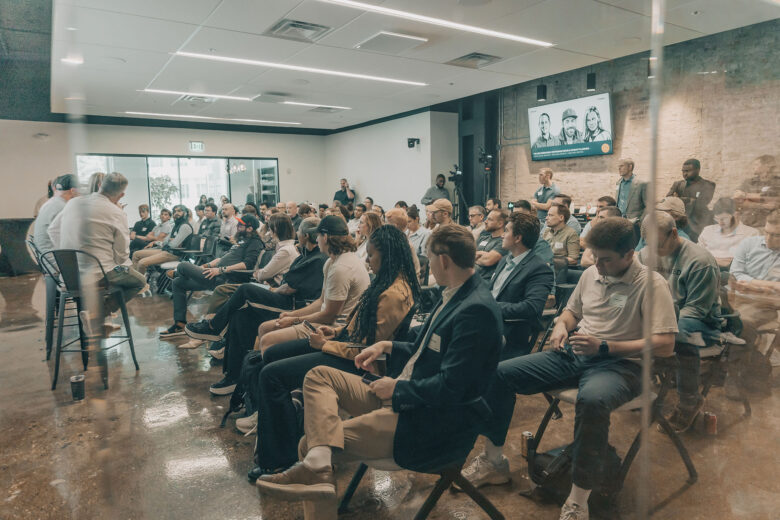
Elevate’s Talent Evolution Workshop brought together founders, operators, HR leaders, and talent professionals for a direct, experience-driven look at one of the most rapidly shifting functions in business: hiring and building teams.
From the rise of AI-enabled builders to the realities of compensation, benefits strategy, and Indiana’s expanding tech ecosystem, the conversation was grounded in what’s actually happening, not what was happening two years ago.
The throughline across every session was clear. The rules have changed. The companies that figure that out early and build their talent strategy around it are the ones that will scale.
Session Overview
Professional Readiness in the Era of AI
Josh Kline, REVelry
The workshop opened with a challenge to everyone in the room: the readiness gap is real, and it lives in boardrooms just as much as classrooms.
AI has arrived at a complicated moment. The generation entering the workforce was trained to do the one thing AI does best: focused, task-oriented work. Meanwhile, the skills AI can’t replicate, judgment, creativity, problem-solving under pressure, and resilience in ambiguity, are exactly what leaders now reward most.
The framing that stuck: this is no longer a technology problem. It’s a posture problem. One foot in, one foot out, waiting for the dust to settle, is not a strategy. The dust won’t settle on your schedule.
Josh introduced the idea of the “pig dinner test,” using a real, open-ended assignment as the interview itself rather than a traditional process. The result: 70% of candidates showed up with something partially built, 30% built it fully. Those are the ones who stand out. Those are the builders.
The session closed with a story about a 24-year-old named Will, an economics and religion major who never wrote a line of code, who is now running a six-figure ARR software company, solo and bootstrapped. His word for the skill that matters most: taste. The judgment call for what’s good, what’s necessary, and what the AI gets wrong. That’s not something any model has.
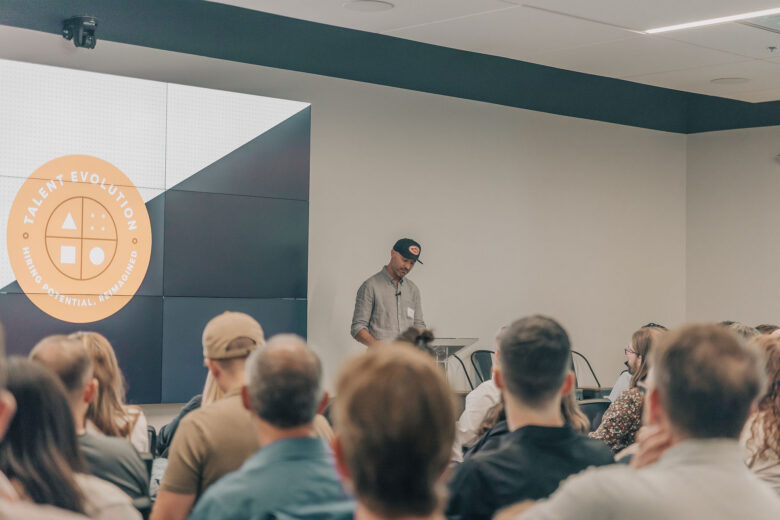
The New Workforce: Rethinking Hiring & Capacity Planning
Toph Day, Elevate Ventures | Megan Jarvis, Jarvis HR | Josh Kline, REVelry | Sean Hise, Crafted
This panel reframed the hiring conversation from the ground up.
The right question is no longer “who do I hire?” It’s “how is work going to get done now?” Hiring, reskilling, and technology used to be three separate strategies. For companies building well today, they’re one formula, and some of the ingredients in that formula are no longer human.
One of the clearest observations from the panel: most companies that say they’ve “welcomed AI in” have really just handed their team a chat window. That’s not agentic. It’s not in the workflow. It’s not changing how work gets done. It’s the half measure.
The conversation also surfaced the structural challenge beneath AI adoption: the way work actually gets done in most companies was never written down. It lives in people’s heads. Leadership’s job now is to make that invisible knowledge visible, turning it into systems, rails, and shared context that survive any one person leaving.
The panel framed it simply: companies built around systems scale. Companies built around individual contributors eventually walk that value out the door.
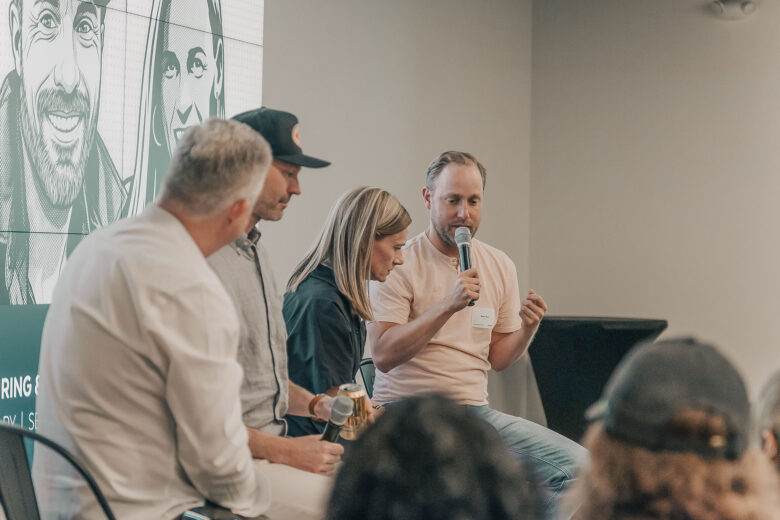
Your First 10 Hires: What Used to Be, What Is & What’s Coming Next
Matt Tyner, Elevate Ventures | Julie Barker, Cultivate Talent
This session connected the past to the present with honesty about what has actually changed.
The old model for first hires was predictable: engineers first, sales reps next, figure out the rest later. Product marketing, RevOps, and enablement were afterthoughts, gaps that showed up when founders tried to hand off selling and found the knowledge couldn’t transfer.
That model doesn’t hold anymore. The first 10 hires today are defined by outcomes, not titles. What do you need to achieve? What does the role actually need to do? The companies getting this right are designing roles around the problem, not defaulting to what the last company hired.
Fractional talent has changed the math, too. Over 50% of companies five years old and younger are now leveraging fractional support at the C-suite level. The network is there. The options are there. The question is knowing what to fractionalize and when to make it full-time.
The signal to look for in early hires, across the board: curiosity, growth mindset, and comfort with change. Not just tolerance for it, but a genuine pull toward it. Those are the people who thrive in startup environments and carry culture forward.
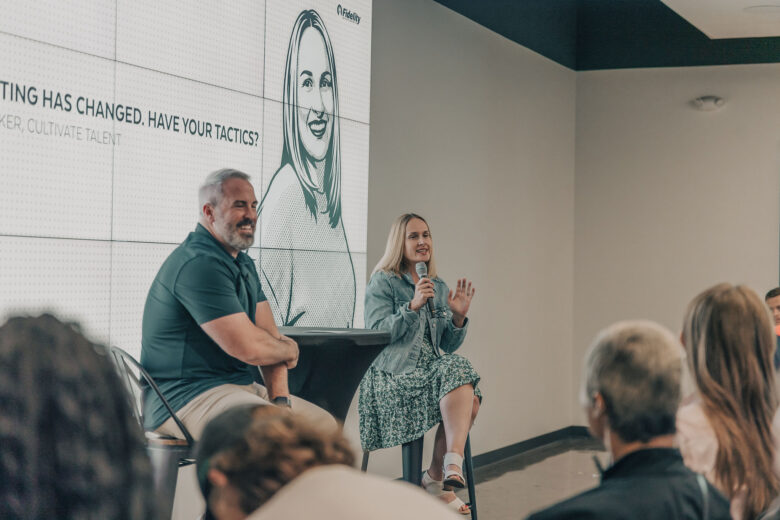
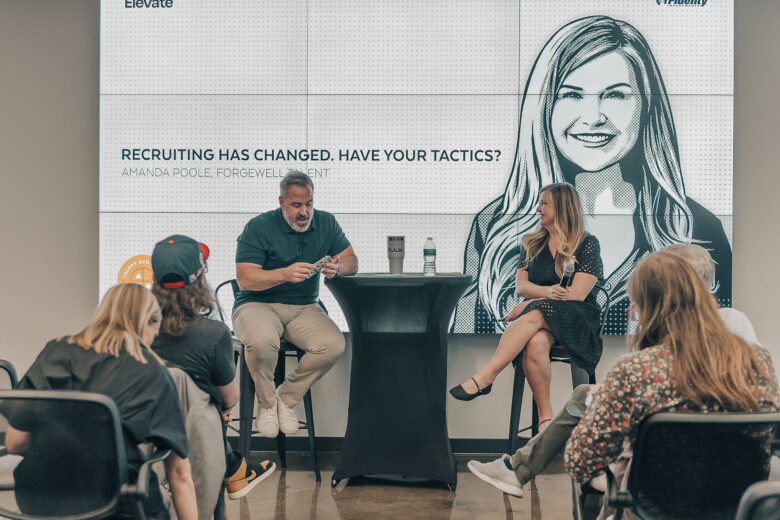
Recruiting Has Changed. Have Your Tactics?
Matt Tyner, Elevate Ventures | Amanda Poole, ForgeWell Talent
This session addressed the reality that both sides of the hiring market, candidates and companies, are navigating a noisier, harder environment than ever before.
For candidates, the volume game is a trap. Submitting a hundred applications via agent gets you nowhere. What actually cuts through: showing up in person, working your network before you need it, and submitting fewer applications with more invested in each one. The most powerful signal a candidate can send today is something they built, not what their resume says, not where they went to school.
For companies, the message was equally direct. Don’t wait until you need talent to start building relationships with it. The founders hiring the best people are cultivating their pipeline before there’s an open role. And they’re shortening the interview process. Hiring processes longer than three steps increase ghosting rates by 78%.
One story landed hard: an agent deployed to source executive candidates without being told to exclude the sitting CEO from outreach. The lesson was simple but expensive. AI is only as good as the quality and completeness of what you put in. Proofread everything. Think around corners.
The Package Matters
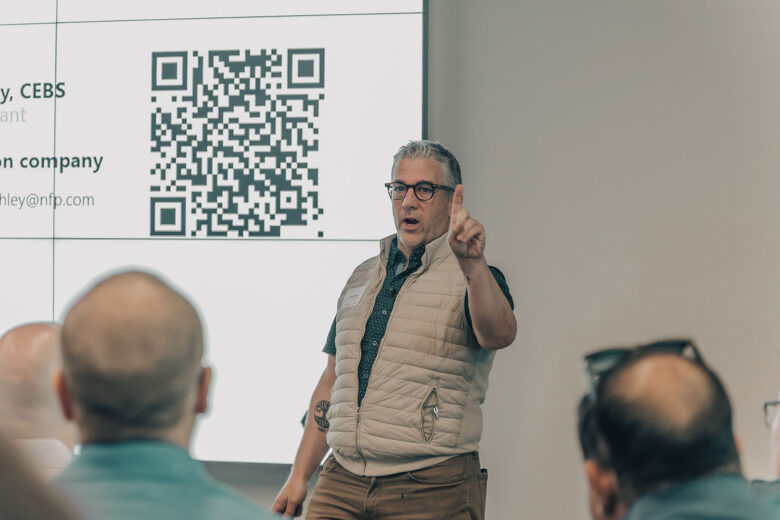
Paul Ashley, NFP
Half of attracting and retaining great talent has nothing to do with salary. That was the core of this session.
Paul introduced the Total Rewards Halo, a framework for thinking about what employees actually value across eight dimensions: compensation, benefits, well-being, leadership development, community impact, work environment, resources, and inclusion and belonging. Every candidate shows up with a different priority set. The company’s job is to know its own philosophy well enough to communicate it clearly and to recognize when there’s a mismatch before it becomes a retention problem.
The generational lens matters here. As companies grow beyond the founding team and start hiring across generations, the benefits package has to stretch to meet different needs. What a Gen Z candidate values is different from what a Gen X hire is weighing. That’s not a problem to solve. It’s a reality to plan for.
One practical point that landed: the external factors you can’t control, inflation, a global pandemic, a shifting labor market, are always in play. What you can control is your mission, your structure, how you communicate, and whether your culture actually matches the package you’re promising.
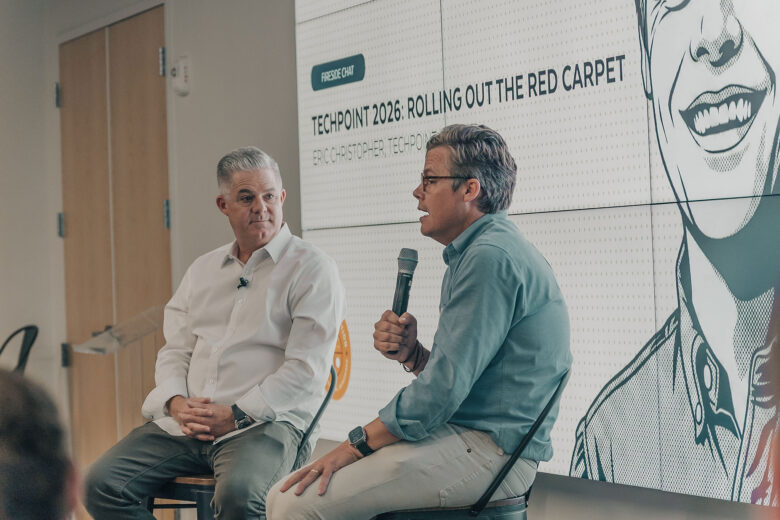
TechPoint 2026: Rolling Out the Red Carpet
Toph Day, Elevate Ventures | Eric Christopher, TechPoint
The workshop closed with a conversation about the bigger picture: what Indiana’s tech ecosystem is, where it’s headed, and the role TechPoint plays in it.
Eric Christopher, new CEO of TechPoint, brought a founder’s perspective to the seat. His experience growing Xylo, including navigating coastal investors who didn’t know Indiana’s story, made the mission personal. The talent is here. The ingredients are here. Indiana just doesn’t tell that story loudly enough, and Eric is focused on changing that.
The conversation turned to TechPoint’s Xtern program, which places roughly 100 interns in host companies across Indiana each summer, drawing from colleges in and out of state. The stat that stuck: students who come in thinking they might want to go to San Francisco or Austin leave at rates above 90% planning to stay in Indiana. The experience does the persuading. The community makes the case.
The ask for everyone in the room: get back in the room. Show up to the events. Connect to the ecosystem. The capital formation, the company starts, the early-stage momentum Indiana needs all come from the network showing up for itself.
Final Takeaways
Every session pointed to the same shift. The old playbook, hire for credentials, build linearly, treat AI as a chat tool, is already behind the curve.
What’s working now: hiring for judgment and curiosity over pedigree, designing roles around outcomes instead of titles, treating AI as infrastructure rather than a shortcut, and investing in the talent pipeline before there’s an open seat.
Indiana has the ecosystem, the talent, and the community to build world-class companies. What the Talent Evolution Workshop reinforced is that the founders doing it right aren’t waiting for clarity. They’re building the systems, finding the builders, and staying close to the people who want to do meaningful work.
That’s the game now.
Featured News
-
What 2026 Holds for Innovation, Capital, and Startup Momentum in Indiana
Read More -
Independent Audit Clears Elevate Ventures
Read More -
20 Episodes In: A Trip Down Memory Lane with Innovate or Evaporate
Read More -
The Art Of Resonance
Read More -
How To Tell & Sell Your Story
Read More -
Storytelling That Scales: Inside Elevate’s 2026 Workshop Kickoff
Read More